UK Forces Seize Stunning Russian Tanker in Bold Move


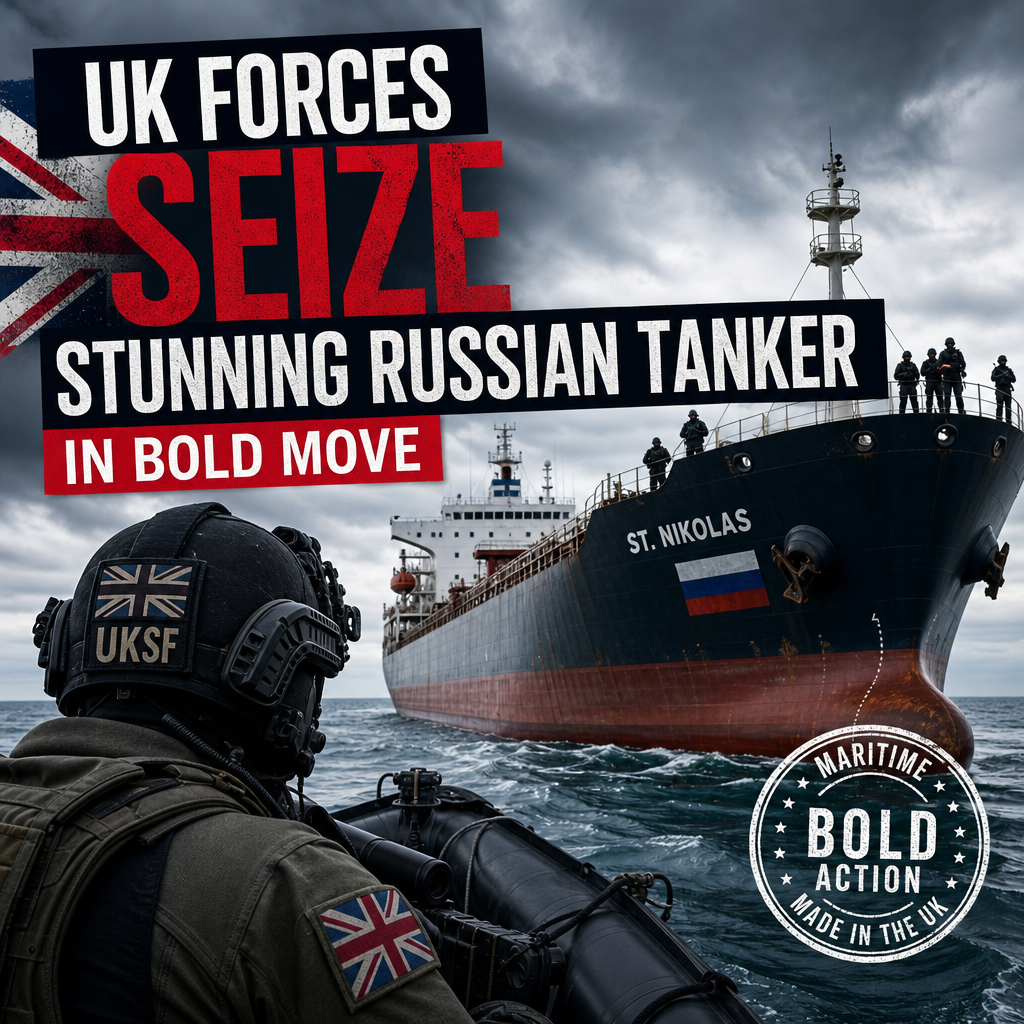
Russian tanker seizure is the latest sign that the shadow war around energy, sanctions, and maritime enforcement is intensifying far beyond the battlefield in Ukraine. British forces reportedly detained a vessel suspected of carrying Russian oil, in a move London says is aimed at disrupting revenue streams that help finance Moscow’s war effort. But the incident is more than a single ship being stopped at sea: it reflects a wider contest over how far Western governments can go to choke off Russian energy exports without triggering legal, diplomatic, or commercial backlash.
At face value, the move fits neatly into the UK’s broader strategy of using sanctions pressure against Russia. Since the full-scale invasion of Ukraine, Western governments have repeatedly tried to limit Moscow’s access to funds by targeting oil shipments, insurers, traders, and shipping networks. The logic is straightforward: if Russian crude can be moved, sold, and insured with fewer restrictions, then sanctions lose some of their force. The problem is that every such enforcement step also raises questions about evidence, jurisdiction, and whether these seizures are targeted disruption or escalation in disguise.



Why the Russian tanker seizure matters
Reports from outlets covering the incident suggest the tanker was suspected of helping move Russian oil in a way that could support the Kremlin’s war economy. That framing is important, because the vessel is not just being treated as a ship on the water, but as a node in a much larger financial network.
From the UK’s point of view, the action sends a message on three levels:




– Economic: Russian oil revenues remain a vital source of state income.
– Political: London wants to show sanctions are not just symbolic.
– Strategic: disrupting shipping can complicate Russia’s efforts to reroute exports through less transparent channels.
Still, these moves are not cost-free. Maritime seizures can create tension with shipping firms, insurers, and countries that rely on predictable trade routes. They also bring a high burden of proof. If authorities believe a tanker is linked to sanctions evasion or illicit cargo transfers, they need to be able to demonstrate that link clearly. Otherwise, the seizure can be portrayed as overreach rather than enforcement.
That tension is part of why reactions to the incident have been so polarized. Western coverage tends to emphasize sanctions enforcement and wartime financing. Russian state-aligned coverage, by contrast, typically casts such moves as hostile interference in legitimate trade. Both narratives are selective, but both also contain a kernel of reality: energy is now a geopolitical weapon, and ships carrying oil are no longer just commercial assets.
A clash of narratives at sea
The most striking thing about the incident is how quickly it becomes a battle over interpretation. One side sees a lawful intervention against a suspected sanctions-busting operation. The other sees an act of coercion designed to squeeze Russia’s economy and disrupt international commerce.
The UK and its allies’ argument
London’s supporters say the West cannot afford to be passive. Russia has shown a willingness to adapt to sanctions by using alternative routes, ship-to-ship transfers, opaque ownership structures, and buyers outside the traditional Western financial system. In that context, a tanker seizure is presented as a practical response, not a headline-grabbing stunt.
This view also holds that enforcement only works if it is visible. If a government announces sanctions but never acts on them at sea, in ports, or against intermediaries, the policy risks becoming toothless. By taking a tanker into custody, the UK is signaling that it is prepared to enforce rules, not just write them.
Russia’s likely response
From Moscow’s perspective, however, such actions fit a familiar pattern: Western governments imposing economic pressure while insisting they are simply upholding rules. Russian outlets and officials often argue that sanctions are unilateral, politically motivated, and harmful to global markets. They tend to frame seizures like this as proof that the West is willing to weaponize maritime law against Russian commerce.
That criticism will resonate in some parts of the world, especially among states that depend on stable energy supplies and fear higher prices or supply disruptions. Even governments that oppose Russia’s war may be uneasy about the precedent of stopping commercial vessels over suspected links to sanctions evasion.
What is clear — and what is not
There are a few things that can be said with confidence. First, the seizure underscores that the maritime side of the Ukraine conflict is becoming more important. Second, it shows that Britain and its allies are still trying to tighten the economic screws on Russia. Third, it highlights how closely oil, shipping, and war finance are now intertwined.
But there are also real uncertainties. Public reporting so far leaves open several questions:
– What evidence did UK forces rely on?
– Was the vessel operating in clear breach of sanctions rules, or merely suspected of doing so?
– Will the detention hold up legally if challenged?
– Could the action encourage more aggressive attempts to police shipping elsewhere?
These questions matter because the line between enforcement and escalation can be very thin at sea. A seizure that is legally solid may strengthen sanctions policy. A seizure that looks politically motivated may do the opposite, feeding claims that the West is overreaching.
The bigger picture
On balance, the UK’s move appears to be part of a broader shift from broad sanctions toward more active enforcement. That may be necessary if Western governments want to make restrictions meaningful. But the more they target vessels and cargoes, the more they must defend the legality and consistency of their actions.
The deeper issue is that Russian oil has become too important to too many countries for sanctions to work cleanly. Some buyers still want discounted crude. Some shippers are willing to take the risk. And some governments are unwilling to fully align with Western pressure. That means every tanker seized is both a tactical win and a reminder of the limits of coercion.
The result is a tense, unresolved reality: the UK may have delivered a bold signal, but the broader struggle over Russian energy revenues is far from settled. In that sense, the seizure is less an endpoint than a snapshot of a conflict increasingly fought in ports, shipping lanes, and legal gray zones rather than only on the front lines.